Women’s Health
Non-invasive ultrasound tech offers new hope for women with fibroids
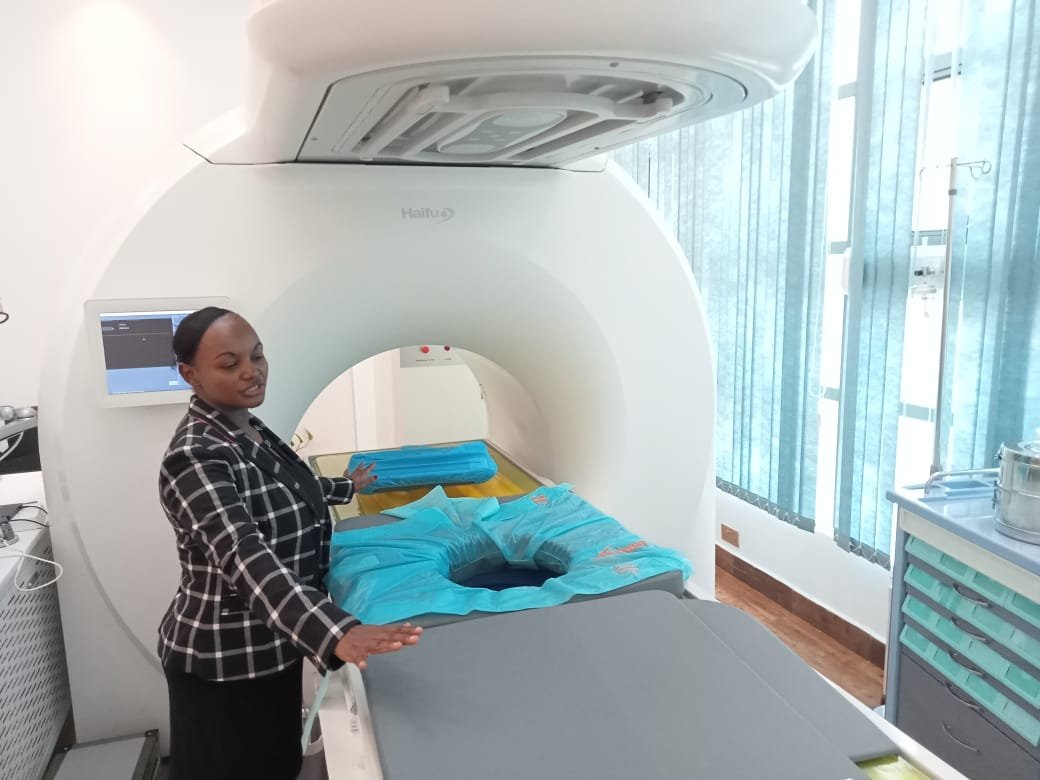
Rita—not her real name—has been recovering at home after undergoing treatment for fibroids in February. She had suffered from excessive bleeding and abdominal bloating for approximately seven years.
She is among several patients who have undergone High-Intensity Focused Ultrasound (HIFU) ablation, a groundbreaking non-invasive technology now being used to treat uterine fibroids in Kenya.
“I feel okay because the procedure went very well and was seamless, and I have had an easy recovery period. I had a bit of abdominal discomfort and fatigue, which resolved within the first and second week after my procedure.”
She now feels much better, with reduced abdominal bloating and increased energy levels.
How focused ultrasound targets fibroids
HIFU is an innovative approach that employs precisely directed ultrasound waves, presenting a compelling alternative to traditional surgical procedures. By offering effective treatment of fibroids without incisions, HIFU promises reduced recovery time and minimised surgical complications for patients.
The technology focuses high-frequency sound waves onto a specific target within the body, creating a concentrated energy beam. Focused ultrasound allows clinicians to target and treat diseased tissue, specifically fibroids, with remarkable accuracy.
HIFU technology creates a thermal lesion within a fibroid. The localised heat, reaching temperatures of 65–100°C or higher, induces irreversible coagulative necrosis and destroys the fibroid cells. Crucially, the process is designed to avoid damage to surrounding healthy tissues, a principle known as conformal ablation.
A non-invasive option for women in Africa
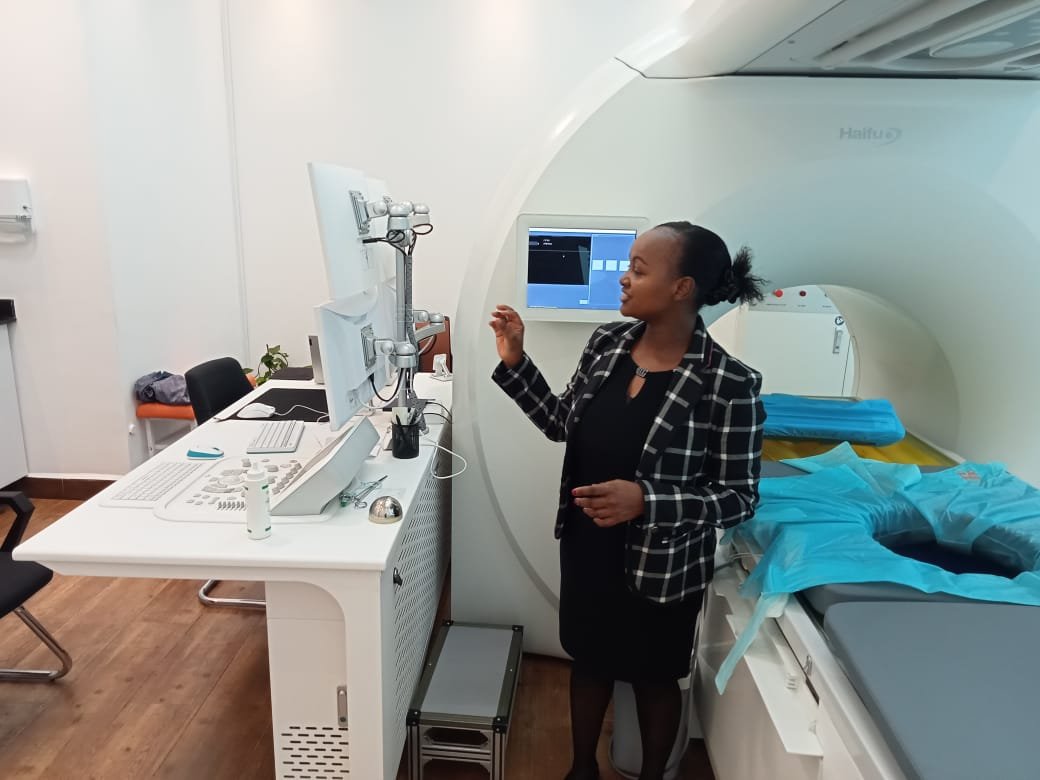
Dr Kireki Omanwa, President of the Kenya Obstetrical and Gynaecological Society, said fibroids and adenomyosis affect a significant number of women, particularly during their reproductive years. HIFU Medical Services Nairobi houses one of the few such machines in Africa.
“We have one machine in Nairobi, one in Egypt, two in Nigeria, one in Tanzania and one in South Africa, making a total of six machines in the whole of Africa.”
More than 3,000 cases have been treated in Africa.
“The traditional way to treat fibroids is by surgery—open or laparoscopic. This entails taking patients to theatre, where we make an incision to reach and remove the fibroids, but the HIFU method is non-invasive.”
With HIFU, patients do not go to theatre, so they do not need anaesthesia or recovery time in the ward. This can offer significant physical and psychological advantages for patients.
Adenomyosis can cause very painful periods when tissue similar to the lining of the uterus grows within the uterine muscle. HIFU may be an option for women who want to avoid surgery and preserve the possibility of having children.
Dr Omanwa advised women experiencing problems with fibroids to ask their gynaecologists about HIFU.